Decision Fatigue: What Science Actually Shows
The popular belief about willpower depletion isn't backed by recent research. A 2025 study of 231,076 judgments reveals what decision fatigue research actually shows.
Decision Fatigue: What Science Actually Shows
Quick Take
- A massive 2025 study of 231,076 medical judgments found no evidence for decision fatigue
- The popular "depleted willpower" theory has been challenged by replication failures
- Routines and automation still help—they reduce cognitive load, not some finite resource
- The science isn't settled, but practical strategies work for different reasons
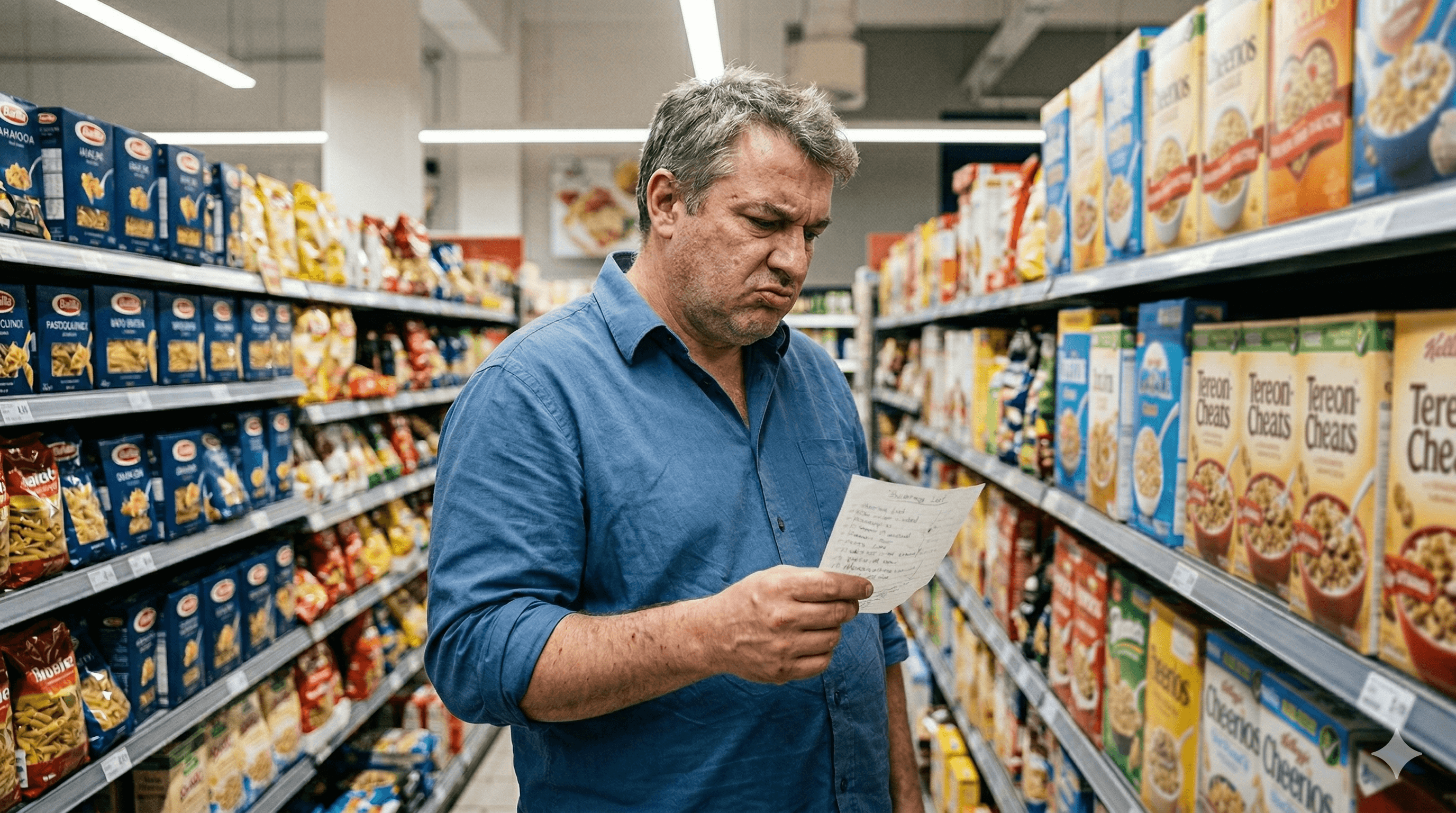
You've been there. It's 5 PM, you've made hundreds of decisions already, and now you can't even decide what to eat for dinner. Everything feels like too much. You've hit what everyone calls "decision fatigue"—the idea that your brain has a limited tank of willpower that runs out as the day goes on.
This concept has exploded in popularity. Productivity gurus cite it. Tech CEOs build their entire wardrobes around it. Articles tell you to automate your mornings to "save" decisions for what matters.
But here's what those articles don't tell you: the science behind decision fatigue is far messier than the narrative suggests. A massive 2025 study using the most rigorous methods available found no evidence for it. The "depleted willpower" theory might be a useful metaphor that's simply not how your brain works.
You deserve an honest look at what research actually shows—and what you can do about mental exhaustion from choices.
What Is Decision Fatigue?
The term gained traction from research on "ego depletion" conducted by Kathleen Vohs and colleagues at the University of Minnesota. Their 2008 study, published in the Journal of Personality and Social Psychology, became one of the most cited papers in psychology [1].
The theory went like this: your self-control and decision-making draw from a limited mental resource. Every choice you make depletes it a little. By the end of the day, you've got nothing left—which is why you default to the easiest option, procrastinate, or make impulsive decisions.
In their laboratory experiments, participants who made a series of choices subsequently showed reduced self-control. They gave up faster on difficult tasks, procrastinated more, and performed worse on arithmetic problems [1]. The effect was consistent across four studies plus a field study with shoppers.
The concept resonated because it matched everyday experience. You do feel more depleted after a day of decisions. Something must be running out, right?
But the theory also predicted something testable: in high-stakes professional settings, decision quality should degrade systematically as people make more choices. This led to one of the most dramatic findings in the literature.
The "What the Judge Ate for Breakfast" Study
In 2011, researchers Shai Danziger, Jonathan Levav, and Liora Avnaim-Pesso examined 1,112 parole decisions made by eight experienced Israeli judges over 50 days [2]. The results were startling.
At the start of each decision session, judges granted parole approximately 65% of the time. As they worked through cases, that rate dropped—sometimes to nearly 0% right before a break. After they ate, the rate immediately bounced back to 65% [2].
The study was hailed as proof that even trained professionals aren't immune to decision fatigue. "Justice is what the judge ate for breakfast" became the headline.
But here's what matters for your understanding: this study has been challenged. Critics pointed out that case characteristics might have shifted throughout the day. The prisoners appearing later might simply have been less deserving. The effect size was also smaller than initially reported when researchers ran simulations [2].
The study remains influential. It showed that sequential position affects decisions. But whether this proves "decision fatigue" as a depleting resource—or reflects something else entirely—became a matter of serious scientific debate.
The Replication Crisis
Decision fatigue became a poster child for psychology's replication crisis. The pattern was familiar to anyone following science over the past decade.
Initial studies showed strong effects. Follow-up studies found similar patterns—but when researchers began preregistering their methods and running large-scale replications, the effects shrank dramatically [3].
The problem wasn't just failed replications. It was how the original research was done.
Most studies used small sample sizes, which inflate effect sizes. Researchers had flexibility in how they analyzed data—what statisticians call "analytic flexibility." Positive results got published; null results languished in file drawers. This combination created a literature that made the effect seem more robust than it actually was [3].
In 2016, a multilab preregistered replication attempt found much smaller effects than the original studies. A 2021 multisite test involving many of the original authors as co-investigators further challenged the findings. Meta-analyses confirmed that publication bias had inflated the literature [3].
By 2024, the scientific community was facing an uncomfortable question: Was decision fatigue a real phenomenon, or an artifact of how psychology had historically done research?
The 2025 Nature Study: No Evidence Found
The most definitive test came in February 2025, published as a Registered Report in Nature Communications Psychology [3]. This methodology matters—the researchers filed their study design and hypotheses before accessing any data, preventing the kind of post-hoc analysis that had plagued the field.
Andersson, Lindberg, Tinghög, and Persson analyzed 231,076 medical judgments made by 174 healthcare professionals at Sweden's national telephone triage service [3]. Nurses handled calls about medical concerns, assessing urgency on a five-point scale. The setting was ideal for testing decision fatigue: hard, repetitive, qualified work with clear outcomes and pseudorandom case assignment.
The researchers tested two specific hypotheses. First, they predicted that fatigued nurses would rely more heavily on their personal defaults (their most common choices). Second, they predicted higher urgency ratings when nurses were more fatigued [3].
Using Bayesian statistics with predefined evidence thresholds, they found something unexpected: strong support for the null hypothesis. The Bayes Factor (BF0+) exceeded 22 for all main tests—meaning the data were over 22 times more likely under "no effect" than under "decision fatigue exists" [3].
Their conclusion was blunt: "We thus found no evidence for decision fatigue. Whereas these results don't preclude the existence of a weaker or more nuanced version of decision fatigue or more context-specific effects, they cast serious doubt on the empirical relevance of decision fatigue as a domain general effect for sequential decisions in healthcare and elsewhere" [3].
This wasn't a cherry-picked null study. The researchers had designed it specifically to find decision fatigue if it existed. They had preregistered hypotheses predicting exactly what patterns they would look for. They found the opposite.
What This Means for the Theory
The 2025 study doesn't prove decision fatigue doesn't exist. It proves it didn't show up in a large, rigorous test in a setting where it theoretically should have appeared.
Several explanations are possible. The effect might be smaller than originally thought—detectable in lab conditions but swamped by noise in real-world settings. It might emerge only in specific contexts that haven't been captured yet. Or the entire theoretical framework might need revision.
Alternative explanations for the original findings are gaining traction. Rather than a depleting resource, your brain might engage in "rational inattention"—allocating cognitive resources based on costs and benefits [3]. When you're tired, information processing genuinely requires more effort, not because a tank is empty but because cognition is inherently costly.
Motivation might also shift. You're not unable to make good decisions when exhausted—you're less willing to invest the effort. That's a fundamentally different mechanism than "depleted willpower."
Some people also appear more susceptible than others. Executive function capacity, experience with automated skills, sleep quality, and overall health all affect how you handle demanding decision environments. Individual differences might matter more than any general "fatigue" effect.
What Still Works: Evidence-Based Strategies
Here's where the story gets practical. Even if the "depleted willpower" theory is flawed, some observations remain. You do feel mentally tired after long decision-making sessions. Some strategies genuinely help. They just work for different reasons.
Routines Reduce Cognitive Load
Steve Jobs wearing the same outfit every day wasn't saving willpower. He was reducing his total cognitive work. Every decision you don't have to make frees attention for decisions that matter.
When you establish routines, you're not preventing depletion—you're lowering the baseline demand. Your brain has the same limited attention and working memory it always had. You're simply asking less of it.
This explains why automation feels so good. You're not accessing a reserve of willpower. You're redirecting resources that were already available.
Timing Affects Performance
You probably do make poorer decisions when exhausted. The 2025 study found no evidence for "decision fatigue" as a depleting resource, but that doesn't mean fatigue doesn't affect cognition.
Sleep deprivation impairs executive function. Time pressure reduces information processing. Stress alters risk assessment. These are well-established effects with clear mechanisms.
The difference: these aren't about depleting a willpower tank. They're about the genuine cognitive costs of operating in suboptimal conditions. Sleep isn't refilling a resource—it's allowing your brain to function normally.
Limiting Options Still Helps
Decision quality degrades when you face too many choices—but not because you're depleted. Your working memory simply can't evaluate an infinite option set. This is a capacity limit, not a depletion effect.
Streamlining your choices works because it matches the problem to your actual cognitive architecture. You have limited attention. You can't process 50 cereal options equally. Accepting this isn't managing a depleting resource—it's respecting reality.
Environment Shapes Behavior
Where the "decision fatigue" literature had value was in highlighting how choice architecture affects decisions. The Danziger study showed that breaks influenced judges [2]. That's real—something about the break changed their behavior.
What changed? Not their willpower levels. Perhaps they were less hungry. Perhaps they had a moment of reset. Perhaps social interaction affected their thinking. The mechanism isn't depletion, but the effect is genuine.
This means the practical advice from the decision fatigue literature often works—you just need the right explanation.
Decision Quality in the Modern World
You live in an environment that makes cognitive demands your ancestors never faced. Every website, app, and notification asks for a decision. Notifications interrupt your flow. Algorithms curate choices. The sheer volume of decisions has exploded.
This isn't "decision fatigue" in the depleting-resource sense. It's chronic cognitive overload. Your brain evolved for a world with far fewer choices, and you're asking it to operate in conditions it wasn't designed for.
The strategies that help—routines, boundaries, automation—work because they reduce total cognitive demand. They give your brain room to breathe. They don't refill a tank; they lower the water level you're trying to maintain.
Individual differences also matter enormously. People with strong executive function capacity handle more decisions. Experts in their field automate more because they've built mental models that reduce load. People with ADHD, chronic stress, or sleep deprivation start at a disadvantage that's about capacity, not depletion.
The question isn't whether you're "depleted." It's whether your cognitive resources match the demands placed on them. Usually, they don't—and the solution isn't to manage a finite resource better, but to reduce demands.
Conclusion: What to Actually Do
Here's the honest summary. The popular "decision fatigue" theory—that you have a limited tank of willpower that runs out—is not supported by recent rigorous science. A massive 2025 study found no evidence for it. Large-scale replications have consistently failed to reproduce original effect sizes.
But this doesn't mean you're imagining your end-of-day mental exhaustion. Something is happening. Your brain does struggle after hours of decisions. Some strategies genuinely help.
The practical advice from the decision fatigue literature is still worth following—you just need the right explanation. Routines work because they reduce cognitive load, not because they save willpower. Strategic timing helps because you're genuinely less capable when exhausted, not because you're depleted. Limiting options works because of working memory limits, not depleting resources.
What should you actually do?
Automate what you can. Not to save willpower, but to reduce total demand. Sleep enough. Not to refill a tank, but to let your brain function normally. Time important decisions for when you're fresh. Not because willpower is highest then, but because cognition works better. Limit options when you can. Not to prevent depletion, but to stay within your information processing capacity.
The science isn't settled. More research will refine our understanding. But for now, you can stop worrying about managing a depleting resource and start focusing on what actually works: reducing demand, respecting your cognitive limits, and making strategic choices about where to invest your attention.
Your brain isn't a battery that runs out. It's a powerful system with real constraints. Work with the constraints, not with flawed theories about depletion.
References
[1] Vohs, K. D., Baumeister, R. F., Schmeichel, B. J., Twenge, J. M., Nelson, N. M., & Tice, D. M. (2008). Making choices impairs subsequent self-control: A limited-resource account of decision making, self-regulation, and active initiative. Journal of Personality and Social Psychology, 94(5), 883-898.
[2] Danziger, S., Levav, J., & Avnaim-Pesso, L. (2011). Extraneous factors in judicial decisions. Proceedings of the National Academy of Sciences, 108(17), 6889-6892.
[3] Andersson, D., Lindberg, M., Tinghög, G., & Persson, E. (2025). No evidence for decision fatigue using large-scale field data from healthcare. Nature Communications Psychology, 3, Article 33.
Was bedeutet das?
Bereit für bessere Haltung?
Entdecke, wie rectify dir helfen kann, deine Haltung nachhaltig zu verbessern.
Jetzt entdecken