flexlib: Robust Biomechanics With Hysteresis and Rust-Powered Speed
How Schmitt-trigger style hysteresis enables reliable state detection in noisy wearable data, and why we pair Python with Rust via Maturin.
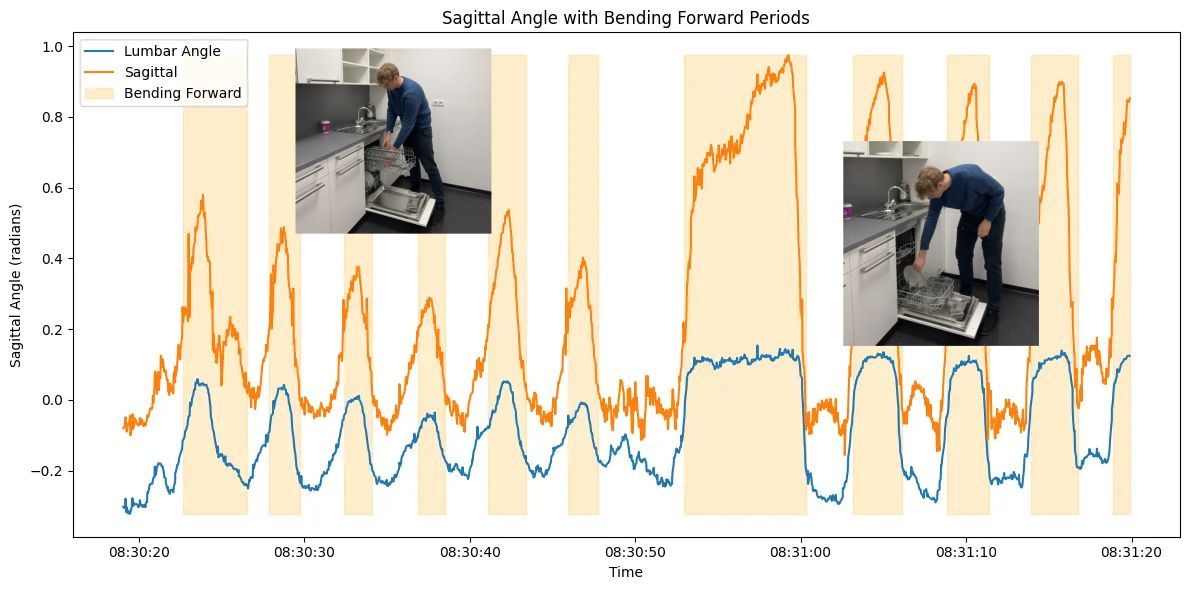
Our FlexTail Software Ecosystem: Advancing Biomechanical Analysis
flexlib is our Python library for processing and analyzing data from the wearable FlexTail sensor, designed for real-world robustness and scientific depth.
What flexlib Does
- Data ingestion from CSV and RSF formats.
- Signal analysis with hysteresis‑based state detection.
- Biomechanical metrics such as sagittal flexion, lateral flexion, and rotation.
The Power of a Hybrid Approach: Python meets Rust via Maturin
We implement performance‑critical components in Rust for its exceptional speed and memory safety, and expose them to Python with Maturin. This gives data scientists a familiar interface while delivering native performance for large‑scale processing.
Why Hysteresis Matters in Noisy Signals
Wearable sensor data can be noisy. Hysteresis solves this by introducing two thresholds and a memory of the previous state, often implemented with a Schmitt trigger. It filters transient noise and prevents rapid toggling when the input hovers around a single limit.
Benefits:
- Noise rejection without heavy smoothing filters.
- Preservation of sharp, meaningful transitions.
- Deterministic behavior under borderline conditions.
References
For more information on flexlib and the FlexTail system, visit the MinkTec developer pages at rectify.de.
Was bedeutet das?
Bereit für bessere Haltung?
Entdecke, wie rectify dir helfen kann, deine Haltung nachhaltig zu verbessern.
Jetzt entdecken