Strength Training Against Osteoporosis: What Your Bones Actually Need
Why strength training is the most effective protection against osteoporosis for women — and how to start improving your bone density today.
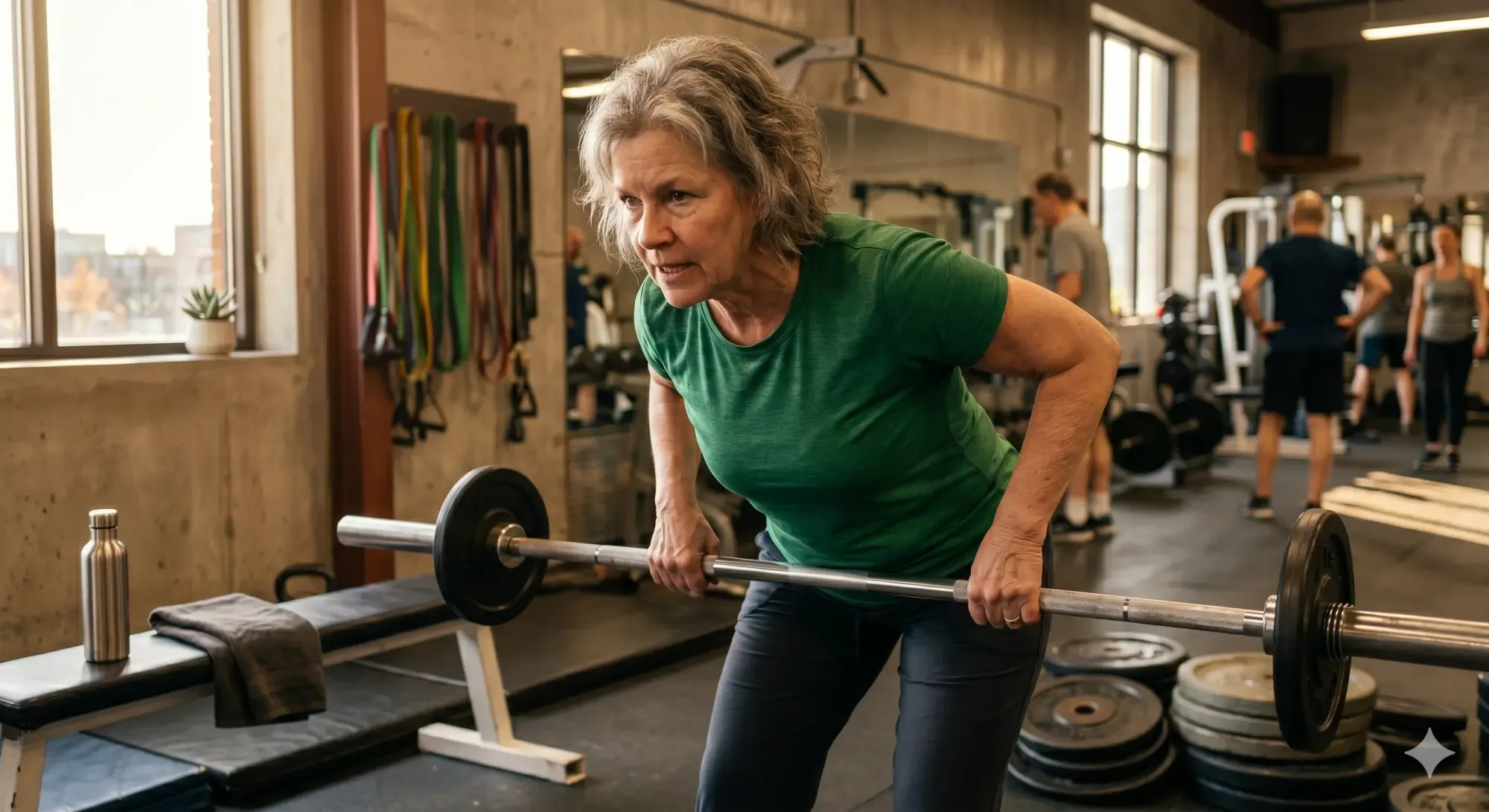
Quick Take
- Bone is not a static scaffold — it adapts to mechanical load. Strength training delivers exactly the stimulus that calcium supplements alone cannot provide.
- Multiple meta-analyses show measurable BMD increases at the lumbar spine and hip in postmenopausal women — with effect sizes between SMD 0.22 and 0.88.
- An analysis of 57 intervention studies found: training groups experienced roughly half as many fractures as control groups without training (RR 0.49; Kemmler et al., 2013).
You get a DEXA scan result. T-score −1.3 at the lumbar spine. Osteopenia. Now what? Most answers start with calcium and vitamin D. Neither is wrong. But both fall short — because bone responds to mechanics, not passivity.
The Bone Myth: Calcium Alone Is Not Enough
Decades of advertising have told a simple story: bone = calcium. More milk, stronger bones. The image is memorable. But it's incomplete.
Calcium is a building block. But building blocks alone don't build a house. That requires an instruction — a signal telling bone tissue: more material is needed here. That signal comes from mechanical load. Strength training. Not from a supplement shelf.
What's interesting: bone is living tissue. It is constantly being remodeled — old material is broken down, new material is built up. In balance. When force acts on bone, that balance shifts in favor of building. When force is absent, breakdown wins. Walking keeps daily life going. Strength training actively pushes the scales in the other direction.
In practical terms: anyone who wants to prevent or slow osteoporosis has more levers available than most people think. One of them is strength training — and it is the most powerful.
Why Women Are Particularly Affected — and Why It Starts Earlier Than Expected
Estrogen protects bone. Not directly as a building block, but as a regulator: it inhibits the activity of osteoclasts — the cells that break down bone. As long as estrogen is present, it keeps breakdown in check. When it disappears, osteoclasts work without that counterpart.
This is the core biology behind postmenopausal osteoporosis. Estrogen decline leads to increased bone turnover, in which resorption outpaces new formation. Trabecular bone loses its connectivity, cortical bone becomes thinner and more porous (Eastell et al., 2016, Nature Reviews Disease Primers).
How quickly does this happen? Measurably, but not dramatically. A longitudinal twin study (Makovey et al., 2007, Journal of Bone and Mineral Research) quantified annual BMD loss in peri- and postmenopausal women: −0.37% per year at the lumbar spine, −0.36% at the femoral neck, −0.27% at the total hip. During the perimenopausal transition, losses can temporarily run higher — up to 1–3% annually. After that, they stabilize at this lower but persistent rate.
Over 20 years, this adds up. Someone who begins losing bone at age 50 and does nothing about it often has a substantially altered bone mineral density by age 70 — measurable by DEXA scan. A T-score below −1.0 corresponds to osteopenia; below −2.5 is classified as osteoporosis (WHO definition; Eastell et al., 2016).
What this means for the timing of prevention: earlier is better. But even at 55, 60, or 65, measurable improvements are still achievable. The research shows this clearly.
How Strength Training Builds Bone — The Mechanism
Bone Listens
Inside bone sit cells that register pressure and tension. These osteocytes form the bone's sensory network — finely tuned to mechanical signals, embedded in a microscopic canal system (Robling & Bonewald, 2020, Annual Review of Physiology).
When you perform a heavy squat, the muscle contraction generates bone compression. Fluid shear forces arise within the lacuno-canalicular network. These activate the osteocytes — and from there, two signaling cascades are triggered:
- RANKL/OPG axis: Mechanical load reduces RANKL (which activates osteoclasts) and increases OPG (which inhibits osteoclasts). Result: less bone breakdown.
- Sclerostin/Wnt axis: Mechanical load inhibits sclerostin. This releases Wnt signals that stimulate osteoblast proliferation. Result: more bone formation.
This is Wolff's Law in molecular resolution. Bone adapts to load — in direction and intensity. Anyone who regularly lifts weights continuously signals to their bone tissue: more is needed here.
What Swimming and Cycling Cannot Deliver
Both sports are good for the cardiovascular system. For bone, they are less relevant. The reason is mechanical: swimming and cycling generate almost no axial load on the spine and hip. Without this load, the stimulus for the osteocyte network is absent — and with it, the bone-building signal (Daly et al., 2019, Brazilian Journal of Physical Therapy).
Walking is better than nothing. But ordinary walking generates only moderate forces. Strength training with progressive overload delivers stimuli that everyday movement simply cannot reach.
What the Studies Show
BMD Increases Are Measurable
Multiple independent meta-analyses from the past five years show consistently: resistance training increases bone mineral density in postmenopausal women — at the sites most commonly affected by osteoporosis.
Shojaa et al. (2020, Osteoporosis International) found standardized effect sizes of SMD 0.54 at the lumbar spine, SMD 0.22 at the femoral neck, and SMD 0.48 at the total hip — all statistically significant. A more recent meta-analysis of 17 RCTs (Zhao F et al., 2025, Journal of Orthopaedic Surgery and Research) found even higher effect sizes for high-intensity training: SMD 0.88 at the lumbar spine, SMD 0.89 at the femoral neck.
What does this mean concretely? Hejazi et al. (2025, Archives of Osteoporosis) quantified absolute changes in an analysis of 40 studies involving 2,230 participants: MD = 0.02 g/cm² at the lumbar spine, femoral neck, and total hip. That sounds like a small number. But 0.02 g/cm² corresponds roughly to one year's worth of natural bone loss — reversed by training.
The Strongest Argument: Fractures
BMD numbers are surrogate parameters. What really matters is fracture risk. Here the research delivers its clearest finding.
Kemmler et al. (2013, Osteoporosis International) analyzed 57 prospective intervention studies. The result: training groups experienced only half as many fractures as control groups without training — relative risk RR = 0.49 (95% CI 0.31–0.76). For hip fractures: RR = 0.47. For vertebral fractures: RR = 0.38. In absolute terms: 36 fractures in training groups versus 73 in control groups.
Strength training acts on three levels simultaneously: it improves bone density, strengthens the musculature that absorbs impact in a fall, and improves balance — a threefold effect on fracture risk (Daly et al., 2019).
The Largest Network Meta-Analysis
Li et al. (2025, Scientific Reports) synthesized 49 studies involving 3,360 participants in a network meta-analysis. The combination of endurance and strength training ranked first for lumbar spine BMD. Strength training alone is also significantly effective. This sample size — nearly 3,400 study participants in a single analysis — makes the findings particularly robust.
Getting Started — What Effective Training Looks Like
Which Exercises?
The research shows: compound movements — exercises that engage multiple large muscle groups simultaneously — generate the strongest bone stimuli. The more muscles contract, the greater the force acting on the bone.
For the spine and hip, the primary target regions:
- Squat: loads the femur, tibia, lumbar spine, and hip simultaneously
- Romanian Deadlift: strong stimulus for the posterior chain, femoral neck, and ilium
- Hip Thrust: direct gluteal stimulus with axial load on the femoral neck
- Rowing (bent-over row, cable row): trunk stabilization, upper spine
- Overhead Press: axial load on the shoulder and mid-spine
These are not arbitrary choices. They are the movements consistently used in the intervention studies analyzed (Daly et al., 2019; Shojaa et al., 2020).
How Intense — and How Often?
This is where one of the most important findings lies: intensity matters.
A systematic review of 100 studies (Kistler-Fischbacher et al., 2021, Bone) shows clearly: training below a certain intensity threshold produces almost no measurable bone effects. Only high intensity additionally improves structural bone parameters — geometry, cross-sectional area, bending stiffness. Zhao F et al. (2025) and Kitagawa et al. (2022, Bone Reports) confirm: high-intensity training (≥70% of 1-repetition maximum) is significantly more effective than moderate intensity.
That sounds like a lot. But it doesn't have to be. Anyone who can complete 10 repetitions of an exercise and finds the last two genuinely challenging is in the right zone.
On frequency: Wang et al. (2023, Frontiers in Physiology) and Zhao F et al. (2025) show that 3 sessions per week is optimal for BMD effects — better than 2 and better than daily training without adequate recovery. 2–3 sets per exercise, progressively increased every 2–4 weeks.
One further aspect: adding fast, dynamic movements alongside heavy strength training — short sprints, jumps, direction changes — yields greater bone effects than strength training alone. Meta-analyses show combined approaches achieving effect sizes of SMD 0.41 at the femoral neck and SMD 0.43 at the lumbar spine compared to strength training alone (Zhao R et al., 2015, Osteoporosis International).
What About Safety With Existing Osteopenia?
This question comes up often — and the answer is clearer than many expect.
Ponzano et al. (2021, Physical Therapy) analyzed RCTs in which women at increased fracture risk performed progressive resistance training. Adverse events were rare and minor. The authors' conclusion was explicit: people at elevated fracture risk should be encouraged to do strength training, not discouraged from it. Kitagawa et al. (2022) reach the same conclusion — even in studies involving women with established osteoporosis (T-score ≤ −2.5).
None of this changes the fact that a visit to a doctor or physiotherapist before starting is sensible — especially with known fractures or severe osteoporosis. But the hesitancy toward strength training with osteopenia is not supported by the data.
Getting started looks like this: begin with bodyweight, technique before load, progress slowly. No need to rush toward maximum intensity.
Nutrition as a Partner — Not a Substitute
Calcium and vitamin D are not alternatives to training. They are the material supply — and training is the construction order. Each needs the other.
Anyone who trains but is chronically under-supplied with calcium (1,000–1,200 mg daily for women over 50) or vitamin D limits their own capacity for bone adaptation. The remodeling signal arrives — but the material is missing. The reverse also holds: optimal nutritional status without training means the signal never comes (Daly et al., 2019).
An aspect that is often underestimated: protein. Bone matrix is largely composed of collagen — a protein. Anyone who trains intensely while chronically under-consuming protein works against their own adaptation. Specific targets for postmenopausal women are best established with a nutrition professional — but the general direction is clear: adequate protein remains relevant in the context of strength training for bone health (Daly et al., 2019).
Conclusion
Bone is not a passive material that inevitably ages. It is adaptive tissue — and strength training is the strongest available signal that favors formation over breakdown. The data shows this consistently: measurable effect sizes, clinically relevant fracture risk reduction, a safe profile even with osteopenia. It is never too early to start — and at 55 or 60, measurable BMD improvements are still achievable.
If you want to read further: getting started with progressive strength training without prior experience is more accessible than most people think — and requires neither a gym membership nor expensive equipment to be effective.
What does this mean?
Sources
Makovey J, Nguyen TV, Naganathan V, Wark JD, Sambrook PN. Genetic influences on bone loss in peri- and post-menopausal women: a longitudinal twin study. Journal of Bone and Mineral Research. 2007;22(11):1773–1780. DOI: 10.1359/jbmr.070708
Eastell R, O'Neill TW, Hofbauer LC, Langdahl B, Reid IR, Gold DT, Cummings SR. Postmenopausal osteoporosis. Nature Reviews Disease Primers. 2016;2:16069. DOI: 10.1038/nrdp.2016.69
Shojaa M, von Stengel S, Schoene D et al. Effect of Dynamic Resistance Exercise on Bone Mineral Density in Postmenopausal Women: A Systematic Review and Meta-Analysis with Special Emphasis on the Applied Dose. Osteoporosis International. 2020;31(8):1427–1444. DOI: 10.1007/s00198-020-05441-w
Zhao F, Su W, Sun Y et al. Optimal resistance training parameters for improving bone mineral density in postmenopausal women: a systematic review and meta-analysis. Journal of Orthopaedic Surgery and Research. 2025;20(1):523. DOI: 10.1186/s13018-025-05890-1
Ponzano M, Rodrigues IB, Hosseini Z et al. Progressive Resistance Training for Improving Health-Related Outcomes in People at Risk for Fracture: A Systematic Review and Meta-Analysis of Randomized Controlled Trials. Physical Therapy. 2021;101(2):pzaa221. DOI: 10.1093/ptj/pzaa221
Kitagawa J, Hiraya D, Wakahara T. Effect of High-Intensity Resistance and Impact Training on Bone Mineral Density in Postmenopausal Women with Osteoporosis: A Systematic Review and Meta-Analysis. Bone Reports. 2022;17:101631. DOI: 10.1016/j.bonr.2022.101631
Wang Z, Zan X, Li Y et al. Comparative efficacy of different resistance training protocols on bone mineral density in postmenopausal women: A systematic review and network meta-analysis. Frontiers in Physiology. 2023;14:1105303. DOI: 10.3389/fphys.2023.1105303
Li X, Zhu J et al. Exercise interventions for bone mineral density in postmenopausal women: a systematic review and network meta-analysis. Scientific Reports. 2025. DOI: 10.1038/s41598-025-94510-3
Hejazi K, Rahimi R, Hofmeister M. Effect of exercise training on bone mineral density in postmenopausal women with osteoporosis. Archives of Osteoporosis. 2025. DOI: 10.1007/s11657-025-01594-5
Kistler-Fischbacher M, Weeks BK, Beck BR. The effect of exercise intensity on bone in postmenopausal women (part 1): A systematic review. Bone. 2021;143:115696. DOI: 10.1016/j.bone.2020.115696
Daly RM, Dalla Via J, Duckham RL, Fraser SF, Helge EW. Exercise for the prevention of osteoporosis in postmenopausal women: an evidence-based guide to the optimal prescription. Brazilian Journal of Physical Therapy. 2019;23(2):170–180. DOI: 10.1016/j.bjpt.2018.11.011
Zhao R, Zhao M, Xu Z. The effects of differing resistance training modes on the preservation of bone mineral density in postmenopausal women: a meta-analysis. Osteoporosis International. 2015;26(5):1605–1618. DOI: 10.1007/s00198-015-3034-0
Kemmler W, Häberle L, von Stengel S. Effects of exercise on fracture reduction in older adults: a systematic review and meta-analysis. Osteoporosis International. 2013;24(7):1937–1950. DOI: 10.1007/s00198-012-2248-7
Robling AG, Bonewald LF. The Osteocyte: New Insights. Annual Review of Physiology. 2020;82:485–506. DOI: 10.1146/annurev-physiol-021119-034332
Ready for better posture?
Discover how rectify can help you sustainably improve your posture.
Discover now